西日本編 第6章:旅の延長、そして高山へ
当初の予定では、これで帰路につく予定だった。でも「帰っても待っている人もいない」「調停の空気から離れたい」ということで、旅を続けることに考えを切り替えた。
タブレットの地図で色々調べた。岐阜県の高山市が目に留まった。以前から関心があった街だったが、公共交通機関で訪れるには少し不便ということで諦めていた。でも、今回は車での移動。何とか行けそうかな?と判断して向かった。
しかし、奥飛騨とも言われるだけあって、岐阜県に入ってからの山道は起伏があり、運転には集中力を要した。大型連休で移動している車が多かったことも緊張感を増す要因となった。
昼過ぎに無事に到着した。大型連休で観光客が多いというのは予見できたが、想像以上に海外からの観光客が多いことに気がついた。
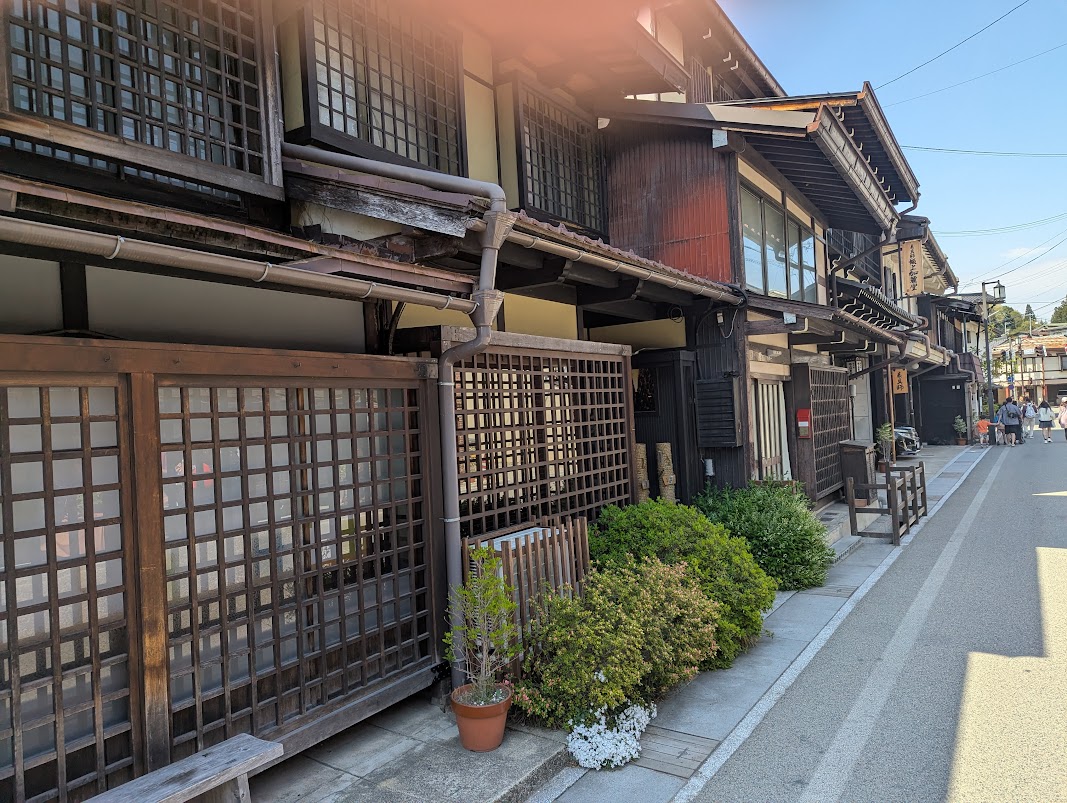
江戸時代の商家・酒屋・代官所を目にした時はタイムスリップしたような感覚に襲われた。古い街並みに感動したが、それと同時に、行けないだろうと考えていた場所に、苦手なはずの長距離運転で来られたことに、自分の成長みたいなものを感じることができた。
高山を発った後は、快晴の空の下、のんびりとドライブした。すると「長良川」という案内板が目に留まった。急ぐ旅でもないので、そちらへ向かった。「日本三大清流」という基本的な情報は知っていたが、近くで見たら、思っていた以上に透き通ったきれいな水が流れていた。
水遊びをしていた家族連れがいた。朗らかな気分になった一方で、同時に寂しさにも襲われた。
その夜は、温泉が併設されている下呂市の「道の駅 飛騨金山ぬくもり里」で車中泊をした。少し、車中泊に慣れてきたのを感じた。
西日本篇 第六章:旅程的延伸,前往高山
按照原本的計劃,到這裡就該踏上回程了。但我心想「反正回去了也沒有人在等我」,加上「單純想遠離那令人窒息的調解氣氛」,於是轉念一想,決定繼續這趟旅程。
拿著平板在畫面上滑著地圖到處看,岐阜縣的高山市吸引了我的目光。那是一座我早就很有興趣的城市,但過去總覺得搭火車或巴士過去有些不便,所以一直沒能成行。不過,這次既然是自己開車,或許可以試試看?評估之後,我便調轉車頭出發了。
然而,不愧是被稱為奧飛驒的地方,一進入岐阜縣,山路開始變得高低起伏,開起來必須高度集中精神。再加上正值黃金週,路上塞滿了出遊的車輛,更讓我的神經緊繃了起來。
幸好,過了中午順利抵達。雖然早就預料到連假遊客會很多,但外國觀光客密集的程度還是遠遠超乎我的想像。
當那些江戶時代留下來的商家、酒藏和陣屋大門展現在眼前時,真有一種時空倒流的錯覺。在為這古色古香的街景感動之餘,看著自己竟然開著原本最不擅長的長途車,來到了這個以前認為自己到不了的地方,心裡不禁湧起一股「自己好像也成長了呢」的奇妙踏實感。
離開高山後,在晴空萬里的好天氣下,我悠閒地開著車。這時,路邊「長良川」的指示牌映入眼簾。既然不是趕時間的旅行,我便順道開了過去。雖然早就知道它是「日本三大清流」之一,但實際走到岸邊一看,那溪水乾淨透徹的程度,還是美得令人屏息。
看著旁邊一邊嬉水、一邊傳出歡笑聲的家庭,那溫馨的畫面讓我的心情也跟著明朗了起來;但與此同時,一陣莫名的寂寞感也突然悄悄爬上了心頭。
那天晚上,我選擇在下呂市附設溫泉的「道之驛 飛騨金山溫馨之里(飛騨金山ぬくもり里)」過夜。躺在車裡,我感覺到自己似乎開始有一點習慣這種車宿的生活了。
West Japan Chapter 6: Extending the Journey, and Headed to Takayama
According to my original plan, I was supposed to head home by now. However, thinking that "there is no one waiting for me even if I return" and "I want to escape from the suffocating atmosphere of the mediation," I shifted my mindset and decided to extend the trip.
I searched around using the map on my tablet, and the city of Takayama in Gifu Prefecture caught my eye. It was a place I had been interested in for a long time, but I had given up on it before because visiting by public transportation was a bit inconvenient. But this time, I had my car. Judging that I could probably make it, I set off.
However, as it is often called Oku-Hida (deep Hida), the mountain roads after entering Gifu Prefecture were filled with steep ups and downs, requiring intense concentration to drive. The fact that so many cars were traveling during the Golden Week holidays was another factor that heightened my anxiety.
I arrived safely just after noon. While I had anticipated many tourists due to the holidays, I noticed that there were far more visitors from overseas than I had ever imagined.
When I laid eyes on the merchant houses, sake breweries, and the government outpost from the Edo period, I was struck by a sensation of having traveled back in time. I was deeply moved by the historic townscape, but at the same time, realizing that I had driven all this way—handling long-distance driving which I was supposed to be bad at—to a place I thought I could never reach, allowed me to feel a sense of personal growth.
After leaving Takayama, I drove leisurely under a perfectly clear sky. Then, a signpost for the "Nagara River" caught my eye. Since I wasn't in a hurry, I headed toward it. I knew the basic facts, such as it being voted one of the "Three Clear-Flowing Rivers of Japan," but seeing it up close, the water flowing past was beautifully transparent beyond my expectations.
There was a family playing in the water. While it brought a cheerful mood to my heart, I was simultaneously overcome by a wave of loneliness.
That night, I spent the night in my car at "Michi-no-Eki Hida Kanayama Nukumori-no-Sato" (Roadside Station) in Gero City, which has an attached hot spring. I felt that I was finally getting a bit used to car camping.
Chapitre 6 du voyage dans l'ouest du Japon : Prolongation du voyage, direction Takayama
Initialement, j'avais prévu de prendre le chemin du retour. Mais en me disant que « même si je rentrais, personne ne m'attendait » et que « je voulais m'éloigner de l'atmosphère pesante de la médiation », j'ai changé d'avis et décidé de poursuivre mon voyage.
J'ai fait des recherches sur la carte de ma tablette et mon regard s'est arrêté sur la ville de Takayama, dans la préfecture de Gifu. C'était une ville qui m'intéressait depuis longtemps, mais j'y avais renoncé car s'y rendre en transports en commun était un peu compliqué. Mais cette fois-ci, j'avais ma voiture. Estimant que c'était faisable, j'ai pris la route.
Cependant, comme on l'appelle aussi Oku-Hida (le Hida profond), les routes de montagne après mon entrée dans la préfecture de Gifu étaient très escarpées et exigeaient une concentration totale pour la conduite. Le grand nombre de véhicules circulant pendant la Golden Week a été un facteur de stress supplémentaire.
Je suis arrivé à bon port juste après midi. Je m'attendais à voir beaucoup de touristes en raison des vacances, mais j'ai constaté qu'il y avait bien plus de visiteurs étrangers que je ne l'aurais imaginé.
En découvrant les maisons de marchands, les brasseries de saké et le bureau du gouverneur datant de l'époque d'Edo, j'ai eu l'impression de faire un bond dans le temps. J'ai été émerveillé par ces vieux quartiers, mais en même temps, le fait d'être parvenu jusqu'à ce lieu que je croyais inaccessible, en enchaînant les kilomètres alors que je me pensais incapable de conduire sur de longues distances, m'a donné le sentiment d'avoir grandi.
Après avoir quitté Takayama, j'ai roulé tranquillement sous un ciel radieux. C'est alors qu'un panneau indiquant la « rivière Nagara » a attiré mon attention. Comme rien ne me pressait, je m'y s'est dirigé. Je connaissais les informations de base, notamment qu'elle faisait partie des « trois cours d'eau les plus purs du Japon », mais en l'approchant, j'ai vu une eau d'une transparence bien plus incroyable que ce que j'imaginais.
Il y avait une famille qui jouait au bord de l'eau. Cela m'a mis du baume au cœur, mais m'a en même temps plongé dans une certaine solitude.
Ce soir-là, j'ai passé la nuit dans ma voiture au « Michi-no-Eki Hida Kanayama Nukumori-no-Sato », une station de repos située dans la ville de Gero et dotée d'une source chaude. J'ai senti que je commençais à m'habituer un peu à ce mode de vie.
Westjapan Kapitel 6: Verlängerung der Reise und auf nach Takayama
Eigentlich hatte ich vor, nun den Rückweg anzutreten. Doch bei dem Gedanken, dass „zuhause ohnehin niemand auf mich wartet“ und ich „einfach Abstand von der zermürbenden Atmosphäre der Schlichtung gewinnen wollte“, änderte ich meinen Entschluss und beschloss, die Reise fortzusetzen.
Ich suchte auf dem Tablet nach verschiedenen Routen, und die Stadt Takayama in der Präfektur Gifu fiel mir ins Auge. Es war eine Stadt, für die ich mich schon lange interessiert hatte, aber ich hatte den Besuch früher aufgegeben, weil sie mit öffentlichen Verkehrsmitteln eher umständlich zu erreichen war. Diesmal war ich jedoch mit dem Auto unterwegs. Ich schätzte die Lage so ein, dass es machbar sein müsste, und fuhr los.
Da die Region jedoch nicht umsonst „Oku-Hida“ (tiefes Hida) genannt wird, waren die Bergstraßen nach dem Erreichen der Präfektur Gifu sehr kurvig und steil, was dem Fahren höchste Konzentration abverlangte. Dass wegen der Golden Week sehr viele Autos unterwegs waren, trug ebenfalls dazu bei, meine Anspannung zu erhöhen.
Kurz nach Mittag kam ich sicher an. Dass wegen der Feiertage viele Touristen da sein würden, hatte ich mir gedacht, aber ich war überrascht, wie unglaublich viele Menschen aus dem Ausland unterwegs waren.
Als ich die historischen Kaufmannshäuser, Sake-Brauereien und die alte Regierungsstelle aus der Edo-Zeit sah, fühlte ich mich wie in der Zeit zurückversetzt. Ich war von den alten Straßenzügen tief beeindruckt, aber gleichzeitig spürte ich so etwas wie persönlichen Stolz darüber, dass ich es trotz meiner eigentlichen Schwäche für Langstreckenfahrten an einen Ort geschafft hatte, den ich für unerreichbar gehalten hatte.
Nachdem ich Takayama verlassen hatte, fuhr ich unter strahlend blauem Himmel gemütlich weiter. Da fiel mir ein Hinweisschild auf den „Nagara-Fluss“ ins Auge. Da ich es nicht eilig hatte, bog ich dorthin ab. Die grundlegenden Fakten – etwa dass er zu den „drei reinsten Flüssen Japans“ gehört – waren mir bekannt, aber aus der Nähe betrachtet floss dort ein Wasser, das meine Erwartungen an Klarheit und Sauberkeit noch übertraf.
Eine Familie spielte dort am Wasser. Während mich dieser Anblick einerseits fröhlich stimmte, wurde ich im selben Moment von einer tiefen Einsamkeit eingeholt.
In dieser Nacht übernachtete ich im Auto an der Raststätte „Michi-no-Eki Hida Kanayama Nukumori-no-Sato“ in der Stadt Gero, an die ein Onsen-Bad angeschlossen ist. Ich merkte, dass ich mich allmählich an das Übernachten im Auto gewöhnt hatte.